


Heat Pump Repair in Folly Beach, SC
Providing “Comfort for Life” since 1972
& Operated Since 1972
Charleston Company
Comfort Specialist
- Family-Owned & Operated Since 1972
- Third-Generation Charleston Company
- Trane Comfort Specialist
Contact Us
Folly Beach sits at the end of a barrier island with nothing between its homes and the Atlantic Ocean except beach. That position makes it one of the most corrosively demanding environments for heat pump equipment in the entire Southeast. The same offshore winds that make the island appealing carry salt aerosol particles that deposit on every outdoor component of every heat pump on the island continuously. Unlike properties a few miles inland where salt air is a seasonal factor, on Folly Beach it is a year-round constant that shapes how quickly equipment degrades and what fails first. Heat pumps here don’t just handle both heating and cooling. They do it while fighting an environment that is actively working against them from the day they’re installed.
Smoak’s Comfort Control has served Folly Beach as part of our established Lowcountry service area since 1972. Our experienced team understands what this specific environment does to heat pump systems and how to address it accurately.
Our Services
Why Homeowners in Folly Beach, SC Trust Us
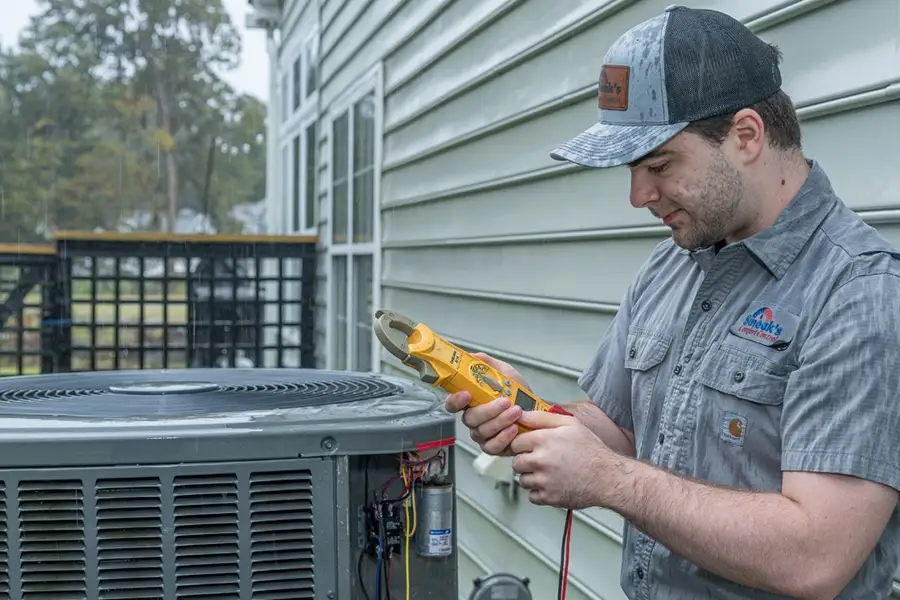
When Your Heat Pump Is Trying to Tell You Something
On Folly Beach, the warning signs of heat pump trouble often develop through corrosion and gradual capacity loss rather than sudden component failure. The environment here produces a specific progression that homeowners and property managers benefit from recognizing early.
- Heating output has declined gradually over one or two seasons rather than stopping suddenly, which on a beachfront property almost always reflects coil corrosion reducing heat absorption capacity rather than a mechanical failure.
- The outdoor unit shows a white or rust-colored oxidation film on the coil fins that has developed faster than expected for the system’s age, indicating the rate of salt corrosion is already affecting performance.
- Refrigerant has needed to be added more than once within a three-year window, which on Folly Beach typically traces to a corroded flared fitting or line connection rather than a manufacturing defect.
- The system starts unreliably in cold weather, engaging normally some mornings and failing to run at all on others, a pattern that frequently points to a capacitor weakened by sustained ocean humidity rather than an intermittent mechanical issue.
- Your home feels noticeably more humid during heating season than it did when the system was newer, suggesting partial reversing valve failure that has the unit running a mixed or incorrect refrigerant cycle.
- Electrical components near the outdoor unit, including disconnect boxes and wiring connections, show visible corrosion or discoloration from salt exposure.
- The system produces weaker airflow than it used to despite a clean filter, which can indicate coil fin damage from corrosion restricting air movement through the outdoor unit.
On Folly Beach, the window between these early signals and a more serious failure is shorter than it is almost anywhere else in the region. Responding early is what keeps repair costs proportionate.
What Goes Wrong With Heat Pumps at the Edge of the Ocean
The failure patterns we see most consistently in Folly Beach heat pumps reflect the ocean environment directly. Understanding them helps explain why the same equipment that lasts 18 years inland may need significantly more attention on a barrier island.
- Aluminum condenser coil fin corrosion is the most consistent finding across Folly Beach heat pumps and it affects both the heating and cooling sides of the refrigerant circuit simultaneously. In heating mode, corroded fins reduce the outdoor coil’s ability to absorb heat from the ambient air. In cooling mode, the same corrosion limits heat rejection. The result is a system that loses capacity in both directions as corrosion progresses, often before homeowners realize the equipment has changed.
- Flared refrigerant line fittings in exposed locations, particularly beneath elevated piling homes where salt air circulates freely on all sides, develop pinhole corrosion leaks that produce gradual refrigerant loss over a full season. These leaks are often misdiagnosed as normal consumption until a proper leak search traces them to a specific fitting.
- Defrost control systems on Folly Beach heat pumps are rarely tested by sustained cold weather, but when a legitimate cold snap does arrive, the combination of ocean moisture and low temperatures causes frost to accumulate on the outdoor coil far faster than in inland locations at the same temperature. A defrost board that has silently failed reveals itself under these conditions in a matter of hours.
- Vacation rental and second-home properties on the island alternate between intensive use during peak rental periods and extended idle periods that promote drain line algae growth, capacitor degradation in humid conditions without operational heat cycling, and refrigerant migration in inactive systems.
- The reversing valve in a Folly Beach heat pump handles the same frequent mild-winter mode switching that affects all Lowcountry coastal properties, and in a salt-air environment, the valve’s internal components are subject to corrosion that can cause sticking or sluggish response earlier than in protected inland installations.
Addressing these conditions proactively is what separates a heat pump that lasts on Folly Beach from one that becomes a recurring expense within its first decade.
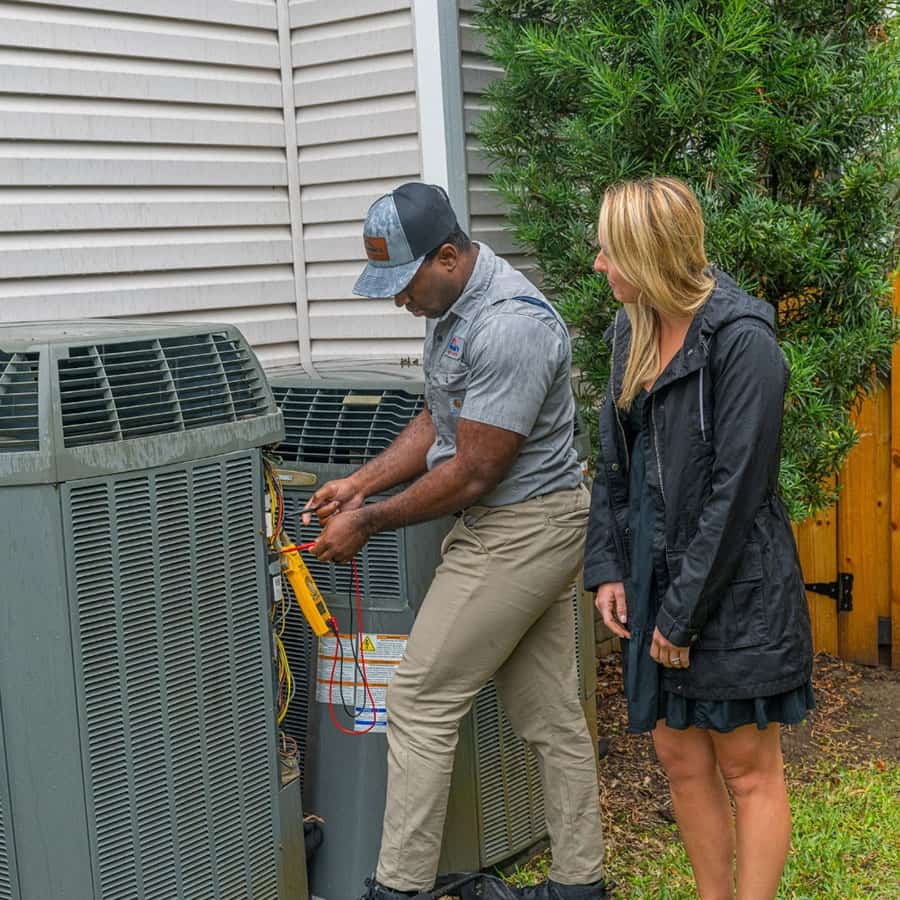
A Gradual Heating Loss That Turned Out to Be the Coil on West Arctic Avenue
Amy called us from her cottage on West Arctic Avenue after noticing over two winters that her heat pump had been gradually producing less heat, to the point where it barely made a difference on cold mornings. She’d been told at her last service visit that the refrigerant was fine and the system was just aging. Our technician measured actual heating capacity against rated output and found a significant gap, then traced it to condenser coil fins that had lost enough surface area to corrosion that the unit could no longer absorb adequate heat from the outdoor air in heating mode. After a thorough coil cleaning, the application of a protective coating, and a confirmed refrigerant charge, the system’s heating output came back to within normal range. Amy said the difference the first cold morning after the service was immediate and obvious. She hadn’t realized how much the coil had been quietly losing ground.
Heat Pump Problems Don't Wait for Business Hours
A heat pump failure on Folly Beach in summer creates an urgent situation for residents and rental guests within hours. A failure during a winter cold snap, while less frequent, is equally serious in a home with ocean wind exposure and limited insulation against offshore temperatures. Smoak’s Comfort Control offers emergency heat pump repair service and covers Folly Beach as a regular part of our service territory. We understand what a beach property breakdown means for both homeowners and property managers, and we respond with the urgency the situation deserves.
Call us any time your system goes down and we’ll get a technician on the way as quickly as we can. You’ll know exactly what we find and what it costs before we start any work.


Why Folly Beach Homeowners Choose Smoak's Comfort Control
Smoak’s Comfort Control has served the Folly Beach community and the greater Charleston barrier island area since 1972. As a third-generation, family-owned company that has never been sold to outside investors or absorbed into a national service brand, we bring the same commitment to honest, quality work to every island property we service. On Folly Beach, where the ocean tests equipment harder than almost anywhere else in the region, that commitment matters more than a competitive price on a part that gets replaced again two seasons later.
- Skilled technicians with direct experience in beachfront heat pump environments and the corrosion-driven failure patterns they produce.
- An A+ rating with the Better Business Bureau reflecting consistent, transparent service over more than 50 years.
- Financing options for repairs and system replacements when the timing is difficult.
- Professional, respectful service practices that treat your beach property with care on every visit.
- Emergency availability, because a heat pump failure at the edge of the Atlantic cannot wait for a weekday appointment.
We’ve been part of this coastline’s community for more than 50 years and we take that relationship seriously with every call we take on the island.