


Heat Pump Repair in Isle of Palms, SC
Providing “Comfort for Life” since 1972
& Operated Since 1972
Charleston Company
Comfort Specialist
- Family-Owned & Operated Since 1972
- Third-Generation Charleston Company
- Trane Comfort Specialist
Contact Us
On the Isle of Palms, the Atlantic Ocean is not a background feature. It is the defining environmental condition for every mechanical system in every home on the island. Heat pumps here deal with direct ocean salt air from the east, tidal marsh air from the Intracoastal Waterway to the west, and a level of humidity that makes the Lowcountry baseline feel moderate by comparison. The result is an environment where the corrosion that might take a decade to develop on an inland system can appear on a beachfront heat pump within a few years of installation, and where the heating side of the system, rarely tested by prolonged cold, must perform reliably during the brief but real cold snaps that arrive without much warning during a Lowcountry winter. When a heat pump here fails, it fails in specific ways that reflect where it lives.
Smoak’s Comfort Control has served the Isle of Palms and the surrounding barrier island communities since 1972. Our experienced team understands what direct ocean exposure produces in heat pump systems and how to address it correctly.
Our Services
Why Homeowners in Isle of Palms, SC Trust Us
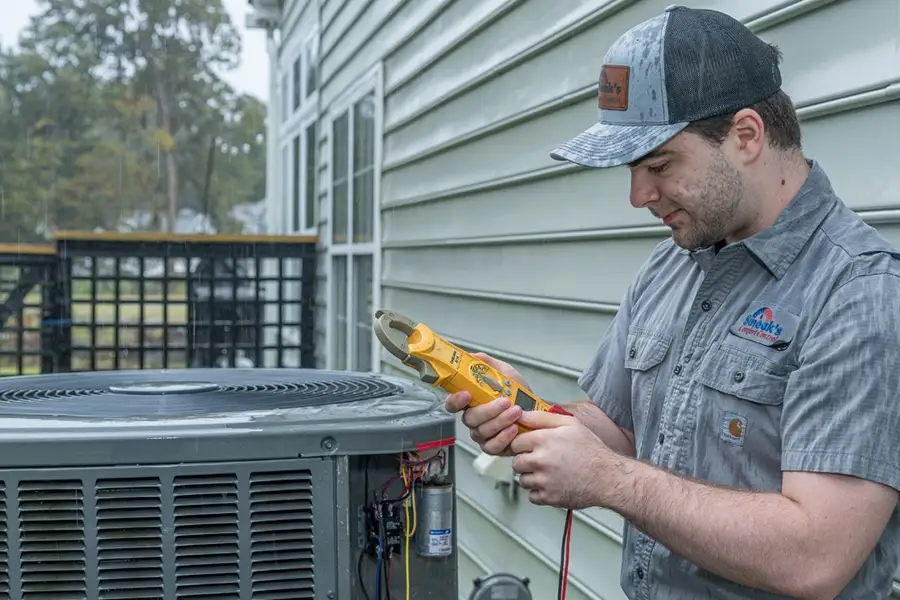
When Your Heat Pump Is Trying to Tell You Something
On the Isle of Palms, the warning signs of heat pump trouble carry more urgency than they would in a less extreme environment. The ocean accelerates problems that might develop slowly elsewhere, and the barrier island’s limited service access means getting ahead of a failure matters more here than almost anywhere else in the region.
- The outdoor unit has developed visible pitting or a white oxidation film on the coil fins that you can see without getting close, which on a beachfront property means the heat transfer surface is already losing efficiency and the rate of degradation will continue without intervention.
- Heating output has declined gradually over one or two seasons rather than failing suddenly, which on a salt-air property typically reflects either coil corrosion reducing heat absorption capacity or a slow refrigerant leak at a corroded line fitting.
- The system starts inconsistently in cold weather, sometimes engaging normally and other times failing to run at all, a pattern frequently caused by a capacitor weakened by sustained ocean humidity exposure.
- Your home’s interior feels more humid during heating season than it did when the system was newer, suggesting the reversing valve has partially shifted and the system is running a partial cooling cycle rather than a full heating one.
- The electrical disconnect box near the outdoor unit shows discoloration, corrosion on the terminal connections, or moisture intrusion that wasn’t there before.
- Refrigerant has needed to be added on more than one occasion in a two to three year window, which always means a leak exists rather than representing normal consumption.
- The system produces a lower volume of airflow than it used to despite a clean filter, suggesting coil restriction from either debris accumulation or corrosion-related fin damage.
On the Isle of Palms, these signals move faster from manageable to serious than they do on properties a few miles inland. Early response is what keeps repair costs proportionate.
What Direct Ocean Exposure Does to Heat Pump Systems Specifically
Most heat pump discussions focus on the cooling season challenges of coastal living. The Isle of Palms adds a dimension that deserves equal attention: what ocean exposure does to the heating side of the system, which is tested less frequently here but still needs to function reliably when it’s called upon.
- Aluminum condenser coil fins corrode under direct ocean salt air faster than any other location in the Charleston service area. In beachfront and near-beach properties, meaningful efficiency loss from corrosion can develop within three to five years of a new installation without protective coil coatings and regular cleaning, affecting the system’s ability to both absorb heat from outdoor air in winter and reject heat to outdoor air in summer.
- Refrigerant line fittings and flared connections exposed to direct ocean air on elevated pilings homes or in exposed utility chases are among the highest-risk components on the island. Salt corrosion at these points develops into pinhole leaks that cause gradual refrigerant loss over a full season, producing performance decline that is easy to mistake for a coil efficiency problem until a proper leak search is performed.
- Defrost control systems on Isle of Palms heat pumps are rarely tested by sustained cold weather, but when a cold snap does arrive, the island’s high ambient moisture means frost accumulation on the outdoor coil happens faster and more aggressively than in drier inland locations at the same temperature. A defrost board that has silently failed will allow the coil to ice over rapidly under these conditions.
- Vacation rental properties on the island present a specific challenge for heat pump longevity: systems that run at full capacity during peak rental season and then sit idle for weeks or months in between accumulate the same idle-period component degradation seen on other barrier islands, including drain line algae, capacitor weakening from humidity without operational heat cycling, and refrigerant migration in inactive systems.
- The sandy, shifting substrate beneath Isle of Palms properties can cause equipment pad movement over years of use, which stresses refrigerant line connections at the unit base and occasionally introduces micro-vibrations into running equipment that appear as low-level rattles before developing into a more significant mechanical issue.
Understanding these failure mechanisms specific to direct ocean exposure is what allows our technicians to identify problems accurately rather than working through a standard checklist that wasn’t written with this environment in mind.

A Heating Failure That Wasn't What It Looked Like on Palm Boulevard
In February, a property manager named Laura called us about a unit on Palm Boulevard that had stopped heating entirely. Guests had reported cold air from the vents. A previous service company had told her the compressor was failing. Our technician found the compressor was actually healthy. What had failed was the defrost control board, which had stopped functioning months earlier during a milder period when the heating side of the system was rarely used. When a genuine cold snap arrived and the outdoor temperature dropped far enough for frost to accumulate rapidly on the coil, the non-functioning defrost board allowed the coil to ice over completely within a few hours of heating operation. With the coil blocked, the system could no longer absorb heat from the outdoor air and the indoor output dropped to nearly nothing. A new defrost board, a manual defrost of the outdoor unit, and a full heating mode test had the system running correctly by that afternoon. The compressor that had been quoted for replacement was fine. The board cost a fraction of what that replacement would have run.
Heat Pump Problems Don't Wait for Business Hours
On the Isle of Palms, a heat pump failure in summer is an immediate crisis for residents and rental guests alike. A failure during a cold snap, while less common, is equally urgent for a beachfront home with limited insulation against offshore wind. Smoak’s Comfort Control offers emergency heat pump repair service and covers the Isle of Palms as part of our established service area. We understand what’s at stake for both primary residents and rental property owners, and we respond accordingly regardless of when the call comes in.
Call us any time and we’ll get a technician on the way as quickly as possible. You’ll know exactly what we find and what it costs before we touch anything.


Why Isle of Palms Homeowners Choose Smoak's Comfort Control
Smoak’s Comfort Control has been serving coastal and inland Charleston communities alike since 1972, and the Isle of Palms has been part of our service area for decades. As a third-generation, family-owned company that remains independently operated, we bring the same commitment to honest, quality work to every home we enter, whether it’s a primary residence or a vacation property that needs to be in top shape for the season.
- Skilled technicians with experience in high-exposure coastal environments and the specific failure patterns they produce.
- An A+ rating with the Better Business Bureau reflecting consistent, trustworthy service over many years.
- Financing options available for unexpected repairs and system replacements.
- Respectful, professional service practices that protect your home and your property from start to finish.
- Emergency availability, because on the Isle of Palms, a broken heat pump cannot wait until Monday.
We’ve been showing up for communities across this coastline for more than 50 years, and we’re proud of the trust that has built over time. Every call is an opportunity to keep earning it.