

AC Repair in Kiawah Island, SC
Providing “Comfort for Life” since 1972
& Operated Since 1972
Charleston Company
Comfort Specialist
- Family-Owned & Operated Since 1972
- Third-Generation Charleston Company
- Trane Comfort Specialist
Contact Us
Kiawah Island is one of the most carefully managed private resort communities on the East Coast, and the homes here reflect that standard in their construction quality, their systems complexity, and the expectations of the people who live in them. But even the finest coastal home is subject to the same Lowcountry climate realities as any other: the Kiawah River and Atlantic Ocean surround the island with salt air and tidal humidity that work against mechanical equipment year-round, and the long cooling season means AC systems here log more operating hours annually than most manufacturers build their lifespan estimates around.
Smoak’s Comfort Control has served the greater Charleston area and its coastal communities since 1972. Our experienced team has the experience to service the full range of residential systems found on Kiawah, from single-zone beach villas to large custom homes with complex multi-unit configurations, and to do it with the professionalism this community expects.
Our Services
Why Homeowners in Kiawah Island, SC Trust Us

Performance Changes Worth Taking Seriously
On Kiawah Island, AC problems often develop subtly. Homes here tend to be well-built and well-insulated, which means a system losing capacity may not produce an obvious temperature failure right away. The early signals are worth knowing.
- Your home takes noticeably longer to reach your set temperature than it did earlier in the season or in prior years, suggesting the system’s output has declined.
- Humidity feels higher indoors than it should despite the system running, often an early indicator of reduced refrigerant charge or a coil issue.
- One section of a larger home or one zone of a multi-unit system consistently underperforms compared to the rest of the property.
- The outdoor condenser unit is noisier at startup or shutdown than it used to be, with clicking, humming, or rattling that wasn’t present before.
- You’re finding water near the air handler or seeing moisture staining on ceilings or walls near duct runs.
- A system that previously ran quietly and efficiently now seems to cycle more frequently without maintaining comfort as well.
- Electrical components at the outdoor unit show visible corrosion, which on a coastal island can develop surprisingly fast even on newer equipment.
Given the investment that Kiawah Island properties represent, addressing these signals early is far more cost-effective than managing a full system failure during peak season.
What the Kiawah Environment Does to Cooling Systems Over Time
Kiawah Island’s natural beauty comes directly from its coastal ecology, and that same ecology creates an environment that places particular demands on mechanical systems. The island’s AC challenges are shaped by several distinct local factors.
- The island’s position between the Atlantic and the Kiawah River means prevailing winds deliver salt-laden air across the entire width of the island, not just to oceanfront properties. Equipment on the river side sees similar corrosion risk as equipment facing the beach.
- Kiawah’s strict landscaping and environmental preservation standards, while maintaining the island’s character, mean that dense vegetation surrounds many homes and outdoor units, trapping humidity close to equipment and sometimes restricting condenser airflow in ways that owners don’t notice until efficiency has already declined.
- The island’s luxury home construction often includes large open floor plans, high ceilings, and extensive glass that create significant cooling loads, and systems sized for these spaces run longer cycles that accumulate operating hours faster than in more modestly sized homes.
- Properties used as vacation rentals or second homes cycle between intensive use and extended closure in patterns that stress systems differently than year-round residential use, and deferred maintenance during ownership transitions is more common here than in primary residence communities.
- The island’s low elevation and proximity to tidal marsh on the western end creates localized humidity conditions that can challenge drain line and condensate management even in well-maintained systems.
Experienced technicians who understand how all of these factors interact can diagnose problems on Kiawah more accurately than those relying on generic troubleshooting approaches.
A Multi-Zone System That Was Quietly Losing Ground on Flyway Drive
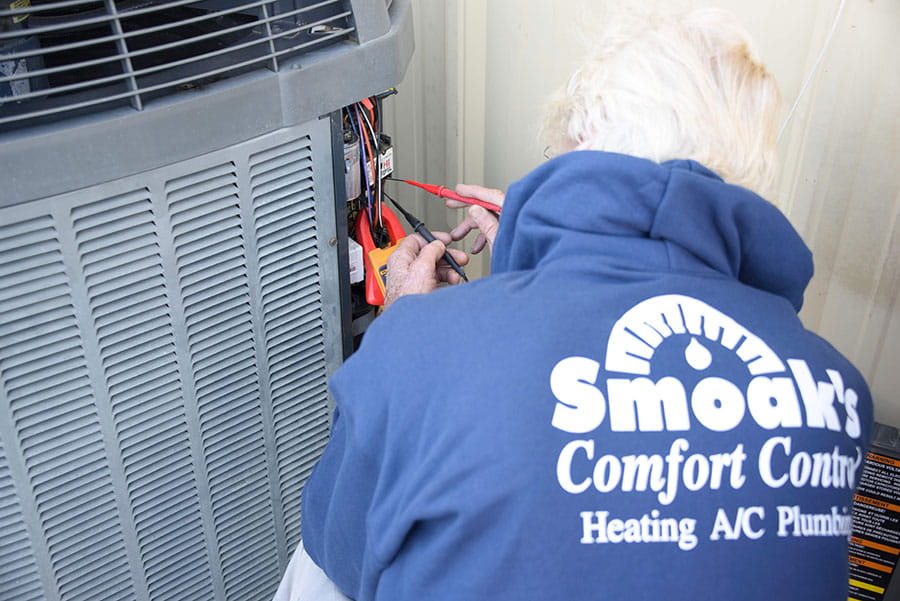
Ellen called us from her home on Flyway Drive after her energy bills had climbed steadily over two summers without any obvious explanation. The system seemed to be running normally. Our technician found that one of three outdoor condenser units serving the home had developed significant coil corrosion that was reducing its heat rejection capacity by an estimated 30 percent, causing it to run far longer than necessary to maintain its zone. The other two units were healthy but had been compensating for the underperforming one in ways that added to their workload as well. After a thorough coil cleaning, corrosion treatment, and refrigerant verification across all three units, Ellen’s energy usage dropped noticeably the following month. The system wasn’t broken. It was quietly degrading, which is often harder to catch and more expensive to ignore.
Emergency Service for a Community That Can't Afford Delays
Kiawah Island’s gated access and distance from the urban core means that when an AC system fails, the response time from a service team matters. Smoak’s Comfort Control offers emergency repair service and covers Kiawah Island as part of our established service area, not as an exception. We understand the standards of this community and respond accordingly.
Whether it’s a primary residence, a second home, or a rental property with guests on site, call us any time your system goes down and we’ll dispatch a technician as quickly as possible. We’ll explain exactly what’s wrong and what it takes to fix it before any work begins.


The Experience and Integrity Kiawah Homeowners Expect
Smoak’s Comfort Control has served the Charleston area’s most discerning homeowners since 1972. As a third-generation, family-owned company that has never been acquired by outside investors or merged into a national service brand, we operate with the independence to make every decision based on what’s right for the customer. That means honest diagnostics, quality parts, and technicians who take pride in the work they do in every home they enter.
- Skilled technicians with experience on complex, high-end residential systems in demanding coastal environments.
- An A+ rating with the Better Business Bureau reflecting consistent, trustworthy service over many decades.
- Financing options available for repairs and system replacements when the timing is difficult.
- Professional, respectful service practices that match the standards of the communities we serve.
- Emergency availability for situations that require immediate response.
Kiawah Island homeowners hold their service providers to a high standard. We’ve met that standard for more than 50 years, and we bring that same commitment to every call we take on the island.
Frequently Asked Questions
Does living on the river side of Kiawah still expose my AC equipment to salt air?
My home has a large open floor plan with high ceilings. Does that affect how hard my AC has to work?
How should I handle AC maintenance for a property I only use part of the year?
Can landscaping around my outdoor units actually reduce AC efficiency?
What should I do if my AC stops working while I have guests staying at my property?
Call Smoak’s Comfort Control immediately. We offer emergency service and cover Kiawah Island in our regular service area. Give us as much information as you can about what the system is doing, whether it won’t start at all or is running but not cooling, so the technician arrives prepared. We’ll prioritize getting your guests comfortable as quickly as possible.